Final Reflection
This course has changed the way that I approach any writing-related tasks. The most major impact that this course has on me is through conveying the importance of a personal voice/style in writing to communicate thoughts both effectively and with impact. Two course texts that drove home this point for me were Young’s “Should Writers Speak They Own English” and Tan’s “Mother Tongue.” Amy Tan’s writing sticks vividly in my memory not only because of the experiences she described that I find relatable, but also in the manner that she delivers it. Because this was one of the first course texts given, I still wasn’t fully sure of what I should expect from this class. However, reading this work gave me a better impression, because it communicated a vivid story that demonstrated Tan’s arguments in a personable way that I hadn’t seen much prior to taking this class. Specifically, Tan essentially rebelled against “Standard English” through the content and the manner of which she wrote this essay, which was a foreign concept to me at the time. Vershawn Ashanti Young’s writing struck the same chord with me, but in a slightly different manner. This work showed me that persuasive arguments don’t have to be written in a strict and formal manner like how the NYC public school system taught me. Instead, “Should Writers Speak They Own English” showed me that my personal informal voice has a place in persuasive arguments, and can actually be used to reinforce the point I would like to make. Young’s choice to write in a form of English that wasn’t considered standard while arguing against the enforcement of “Standard English” in society strengthened his argument.
This importance of personal voice in writing was further communicated to me in this course by the types of assignments we were given, with a particular focus toward the Language and Literacy Narrative. The L&L Narrative’s criteria looked as if it was trying to almost pull out my personal voice by asking me to write about a personal experience. Prior to this assignment, the only writing I completed that was similar was for my college applications. Being given this assignment allowed me to hone in on my personal voice, which can be seen all throughout my L&L narrative. The aim of my word choice throughout that essay was to imitate a flow of consciousness that anybody could follow and identify with, and that starting point was my own stream of thought through my own personal voice. In the second sentence of my L&L narrative, I started the sentence off with “Personally.” Prior to taking this course, I never would’ve allowed myself to start a sentence that way, even for a narrative essay, because I was taught that was bad practice. However, through this course, I was able to identify a writing style and voice that fit me. As a result, I feel like my essay was something that not only had a part of myself but also had a relatable experience for everybody at some point in their lives.
Another important writing skill I learned from this course was identifying an audience prior to starting the writing process so the product can fulfill its purpose to a greater extent. Prior to this class, I never really planned an outline before starting a writing assignment (even large ones). Instead, I would simply identify some general talking points for my essay, and then immediately start writing. This course has showed me that I’ve been shooting myself in the foot every time I’ve done that. The litany of worksheets brainstorming topics and finding sources for the Synthesis Essay showed me that there was a method both less painful and more effective at creating pieces of writing. The prompt of audience in the Synthesis Proposal worksheet forced me to really think about who I wanted to communicate my thoughts to beyond the scope of the class. This part was what I consider to be the most difficult part of that Proposal worksheet, but helped me immensely, After I spent some time thinking of my answer, I discovered that the audience I was most passionate about communicating this essay towards was anyone who was unfamiliar with the immigrant experience. Given this audience, all the language in my Synthesis Essay became targeted at readers who didn’t know about the immigrant experience so that it could hopefully illuminate a part of immigrant struggles to those readers and generate a sense of empathy. In my opinion, the piece of writing that resulted was something that I could never write prior to taking this course because I simply wasn’t exposed to this new way of approaching writing. My Synthesis essay was more compelling because it was meant to be directed at an audience that didn’t have much prior knowledge about the topic. An example can be found in the way I introduced my Synthesis Essay. Instead of making a bold claim in the first sentence, I provided context by simply introducing the average hospital experience. Afterwards, I made connections from this average hospital experience to what immigrants face, which then allowed me to transition into the specific types of struggles that immigrants face when receiving healthcare.
Speaking of communicating ideas effectively, another aspect of writing that I was able to learn in this course was the effective use of multimodal sources, both the process of creating and utilizing these multimodal sources to reinforce my writing/arguments. In my Synthesis Essay, I used the following multimodal sources.
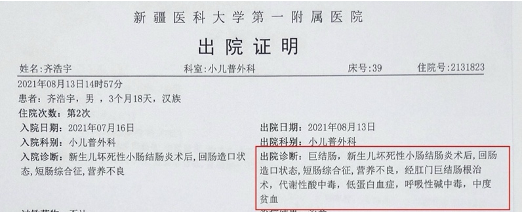
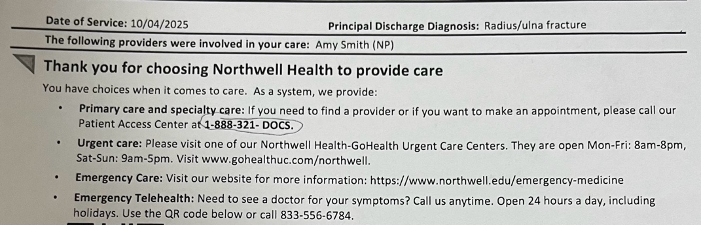
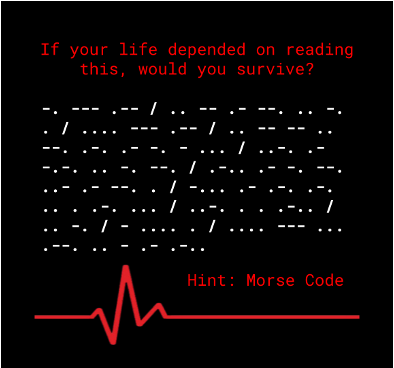
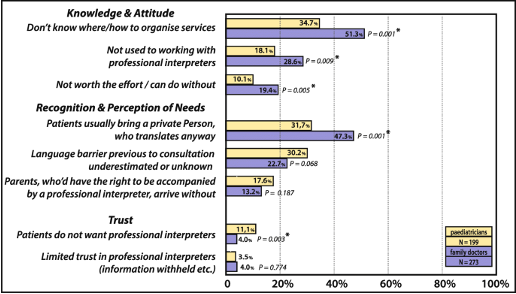
I used each of these multimodal sources in different ways. I used the chart to reinforce thru credibility of the claims I was citing. I used the image of a medical discharge paper in Chinese to generate an engaging hook to my essay. I used my own father’s medical discharge paper to reinforce the credibility of my own personal anecdote. I used the Translation 2 in order to generate a shock factor as the reader finished my essay. Through this course, I was able to critically think about and learn how exactly to implement these multimodal aspects to my own writing to add more value, something that I never considered prior to this course.
Lastly, one important skill I learned from this course is how to research properly. Prior to this course, my research method was lackluster. They would involve me using essentially the first five links from a Google search prompt I would think about to the grand total of one second. Regarding this research skill, I credit the class time we spent in the computer lab. I forget the name of the name of the librarian that helped the class at the time, but she was a rockstar when it came to finding resources. Due to her work, I was able to find the sources that I would eventually use in my Synthesis Essay. From her, I was able to learn that an effective search engine prompt depending on the scope of my own writing. The process that she demonstrated to pick a research topic/question and how to use that to create good search engine phrases helped me narrow down sources I would’ve liked to use. Before that computer lab visit, I had some sources but looking back, they were not good sources. They had maybe a paragraph or two of relevant information. However, through this experience at the computer lab, I was able to use the CCNY library database to find academic and peer reviewed articles that were exactly what I looking for to use in my Synthesis Essay, like “Impacts of English Language Proficiency on Healthcare Access, Use, and Outcomes among Immigrants: A Qualitative Study” by Dr. Pandey and “Barriers to and Solutions for Addressing Insufficient Professional Interpreter Use in Primary Healthcare” by academic researcher Jaeger. I found both of these peer reviewed academic articles through the CCNY library database using research prompting skills I learned from this course.

This entry is licensed under a Creative Commons Attribution-NonCommercial-ShareAlike 4.0 International license.

